The European Bicycle Culture
Not just for kids, bikes are a way of life for any age across many countries and towns in Europe.
LIFESTYLE
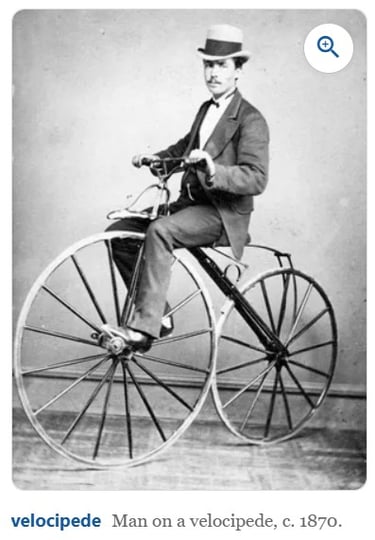
Beginning in the 1860’s the Boneshaker, or Velocipede, was produced in France. Fitted with a saddle, iron frame and wooden wheels, these new sport machines were all the rage until the French-German war slowed the production. But British and American businessmen saw the excitement and opportunity for a new mode of transportation and sport sending patent licenses through the roof.
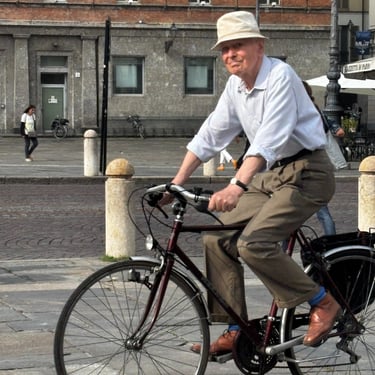
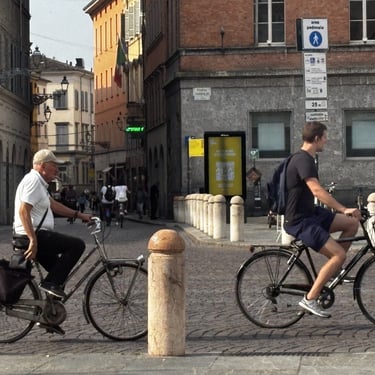
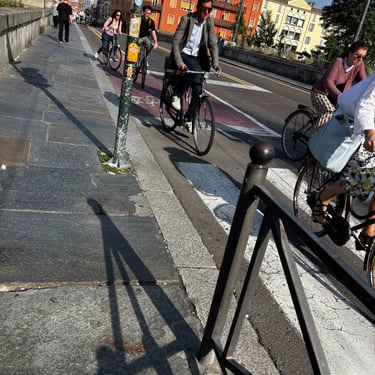
Though the first two-wheeled machine appears to have been invented as early as 1814 with names like Laufmaschine (“running machine”), draisienne, pedestrian curricle, and hobby-horses, the word bicycle first came into use in Europe around 1868. So, it is no wonder that the modern bicycle is an authentic and useful mode of transportation in many European towns. As we traveled through Italy, Albania, Portugal, France, and other counties, we marveled at the incredible use of bicycles for everyday life.
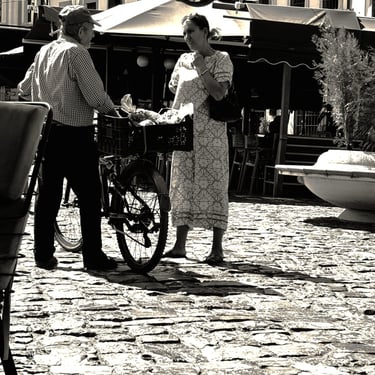
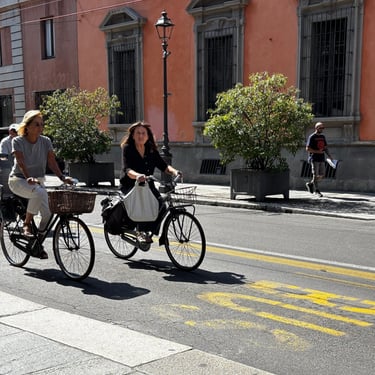
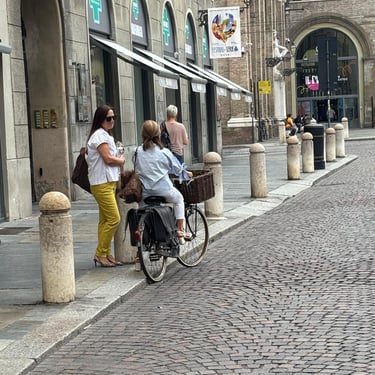
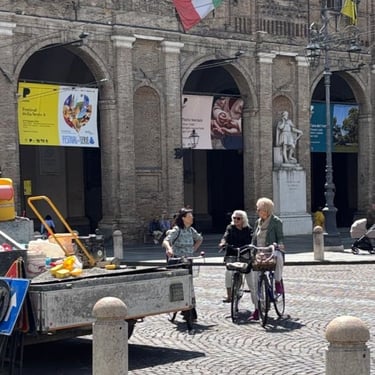
Because relationships are so very important in Italy, stopping their bikes in the middle of the busy road amidst cars, busses, and motorbikes, these ladies took command of life’s hustle and bustle to make sure they caught up on the family news.
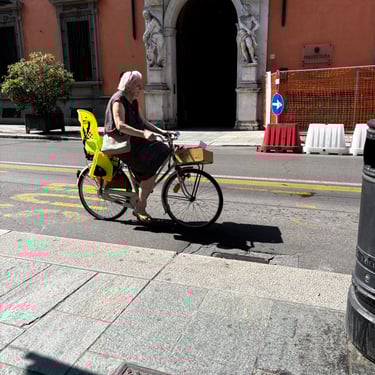
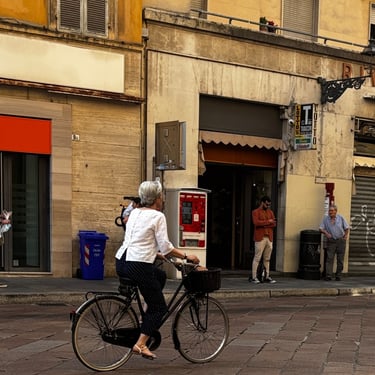
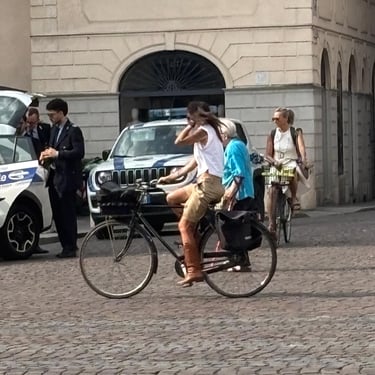
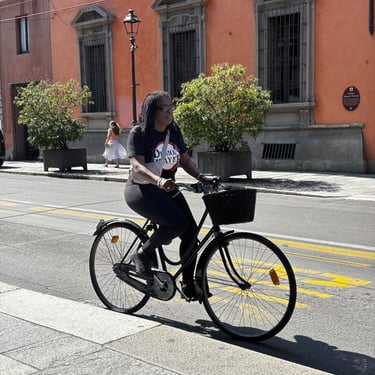
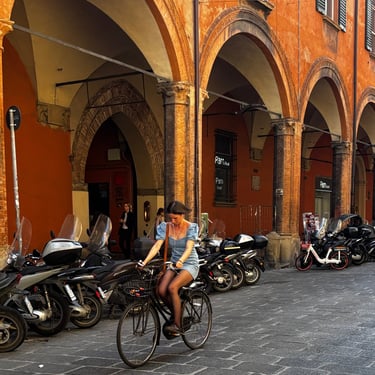
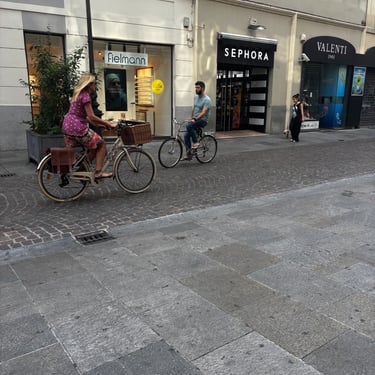
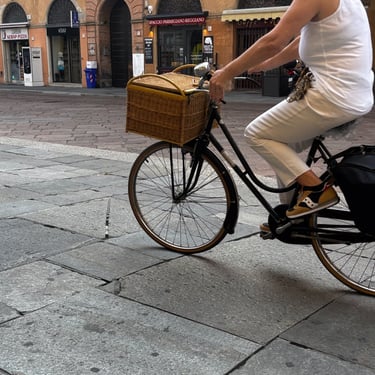
But bicycles are not just for men. Women were seen riding their bicycles through town regardless of their errand. We saw classy Nonna’s in dresses and pearls riding through town on Sunday, clearly headed toward church. From Italy to France, the fashion-conscience women in high heels, sandals or boots had a way of tucking their skirts so as to protect it from greasy bike chains. Whether they were headed to work or a Friday night date, younger and older women alike displayed style as they transported themselves across town.
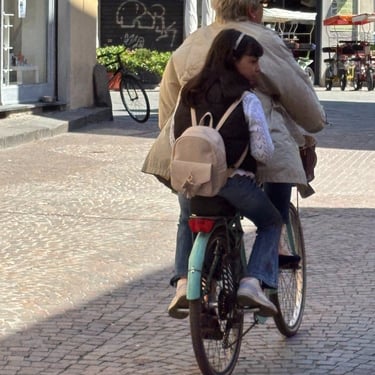
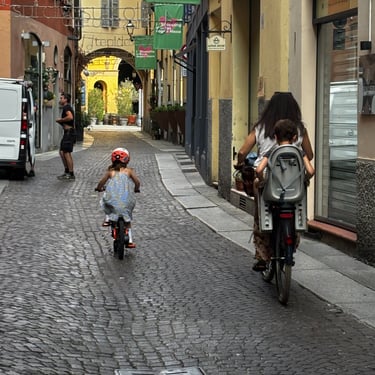
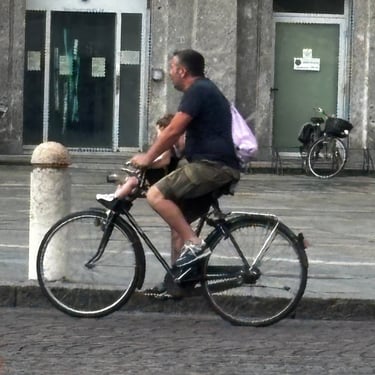
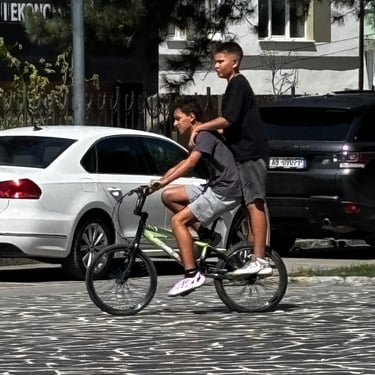
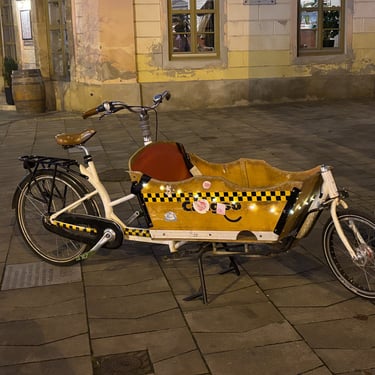
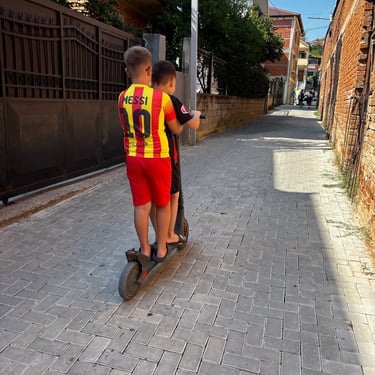
Parents transported children on the back of bicycles and in front of them depending upon the size of the child. And kids transported kids.
We even witnessed, but did could not photograph a dad in business attire with a briefcase dangling from the handlebar who was clearly driving junior to school with his backpack. And a modified bicycle driven by a dad with two children riding over the back tire.
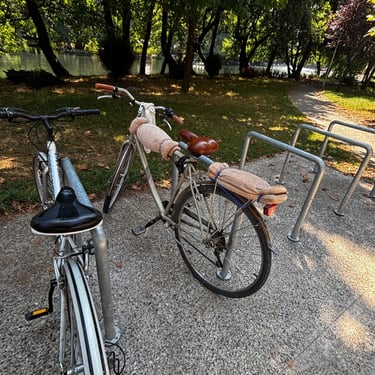
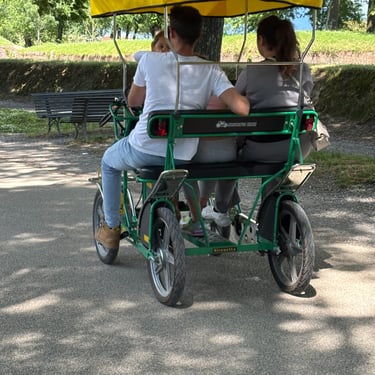
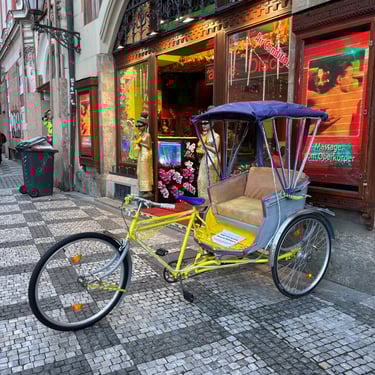
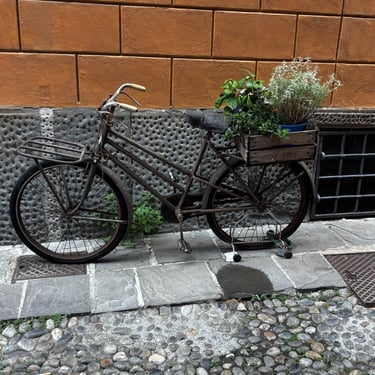
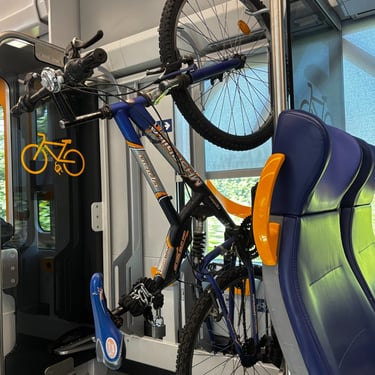
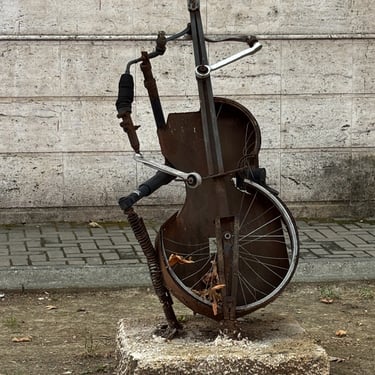
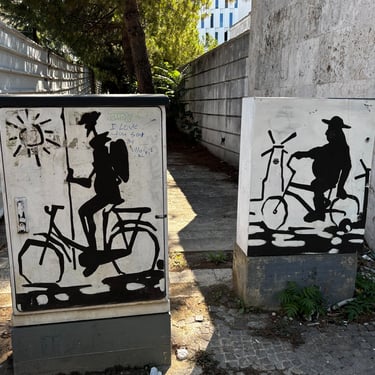
We were astounded every time we saw a new way to use a bicycle or other two-wheeled transportation device. Bicycles are such a part of the European culture, some train cars are especially equipped to hold bikes. Even the art captured bicycles.
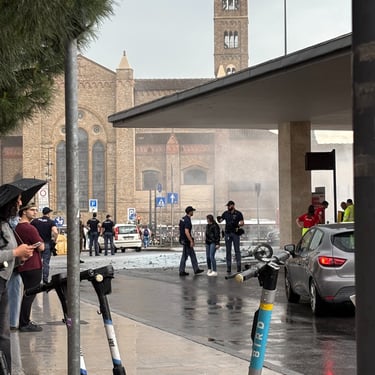
But beware of the new modern electric bikes. As we were arriving in the Florence train station, we saw one explode.
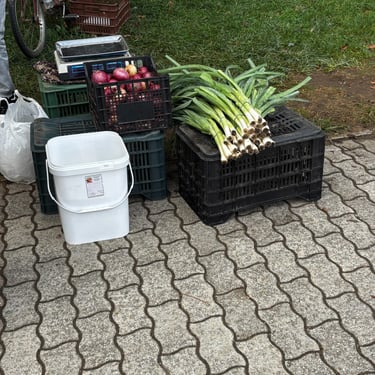
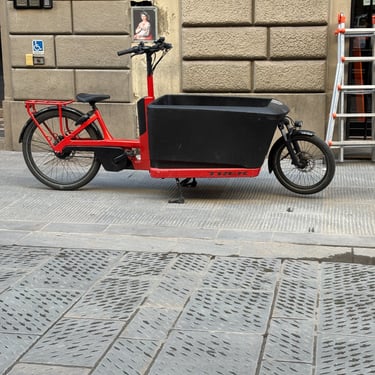
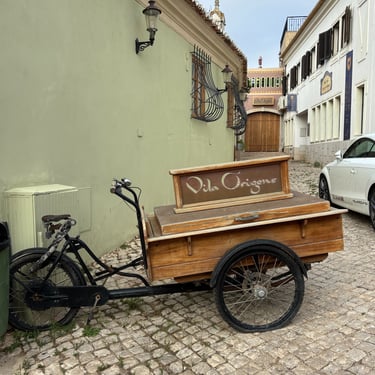
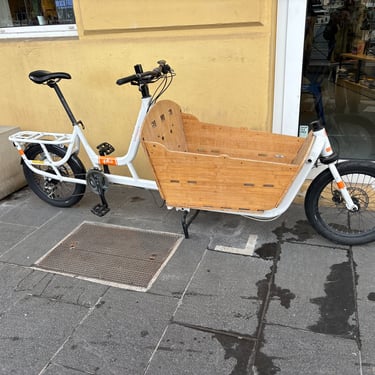
Delivery drivers and salesmen of all types used bicycles to transport and sell their goods. Farmers loaded them with crates of produce. Restaurant runners loaded them with food to deliver. We saw salesmen with flowers and produce in several countries. Makeshift crates of the best home-grown food were stacked 3 feet high in some cases, even if we didn’t capture those photos. And just like any businessperson, talking on the phone to clients while driving in traffic was no different on a bicycle in Europe than in a car in America.
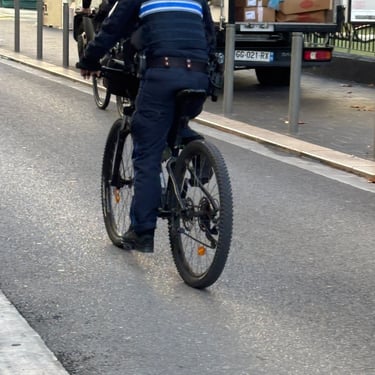
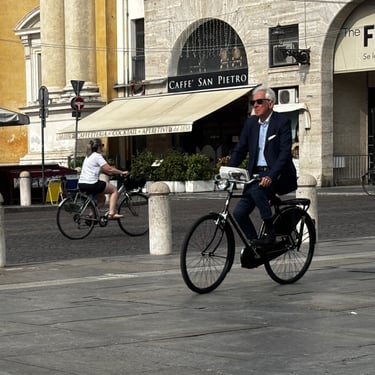
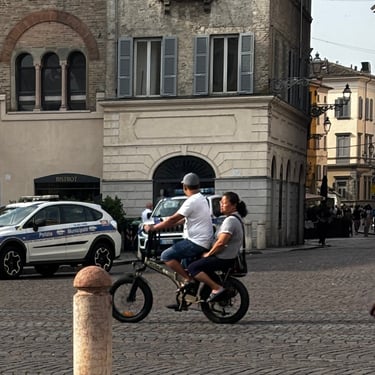
From flip-flops and shorts to loafers and slacks, European men had places to be and bicycles were their transportation. Even the police rode bikes. Some men in suits rode bicycles across the city to begin the work week while others provided passage for a second person. In American it’s common to see kids riding on the back of a bicycle, so imagine our surprise seeing full grown women on the back of the bicycle looking relaxed as though they were on a bus. With no age limits, we saw ladies straddling the rear tire, but we also saw some women riding side saddle as though it were a horse. We couldn’t get the camera out fast enough to prove it.