


TRAVEL
Every Stone Contains Echos of Life


Did You Know...
Europe’s Schengen Zone
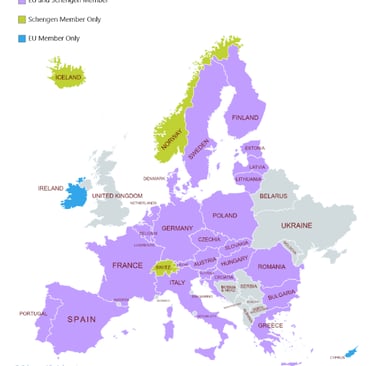
As we began planning for our year of travel, we quickly learned about the Schengen Zone. Initially signed in 1985 in the town of Schengen, Liechtenstein, the zone was fully implemented in 1995. This multi-country agreement was developed to reduce border controls and evolved into a shared policy of economic growth, cultural exchange, emergency response protocols, and ease of travel for work or holiday purposes. As of 2025 there are 29 counties all together in the Schengen Zone who participate in the Visa plan.
While the Schengen Visa generally makes it easier for travelers to move between the countries of Europe without border control, there are some specific requirements visitors must obey. The requirements vary according to your country of origin. Residents of the United States must travel with their passports and are limited to 90 days visitation inside any part of the Schengen zone in each 180-day cycle. It is a rotating cycle, which can be very confusing to non-mathematicians. As a visitor to any Schengen country, it’s very important to calculate your days exactly and thankfully Schengen Calculators have been built to help guests with the math-ing. Visitors who do not abide by the Schengen Visa time limits, risk deportation and banishment from these countries for several years.
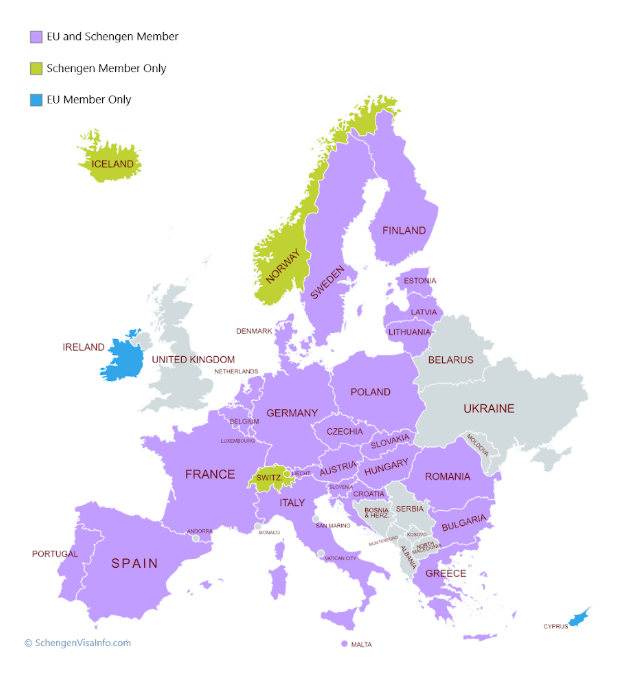
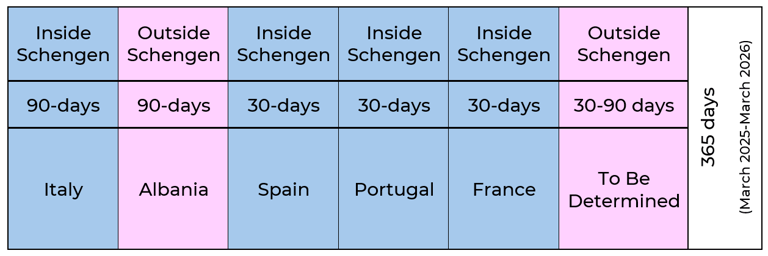
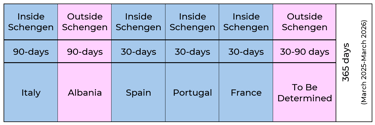
Because our journey is focused on living in several countries for longer-slower travel, we had to carefully balance the time spent inside the Schengen Zone and the time outside the Schengen Zone. This is sometimes called the “Schengen Shuffle” by full time travelers. Here is a visual of our trip as it relates to the Schengen Visa shuffle.
Some rules that govern Europe's immigration


Following The Stones
followingthestones@gmail.com
Authentic people posting original content, photos and lived experiences.