The Best Shoes for Full-Time Travelers
Which shoes do Full-Time travelers pack or wear when they have limited luggage and hundreds of miles to walk?
LIFESTYLE
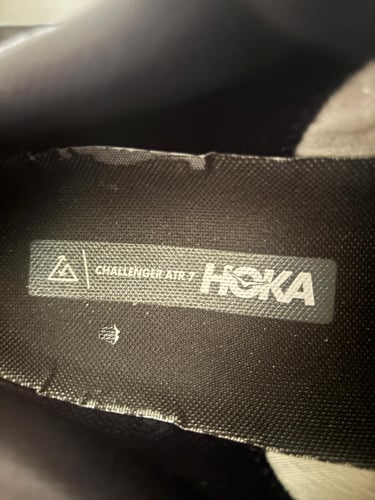
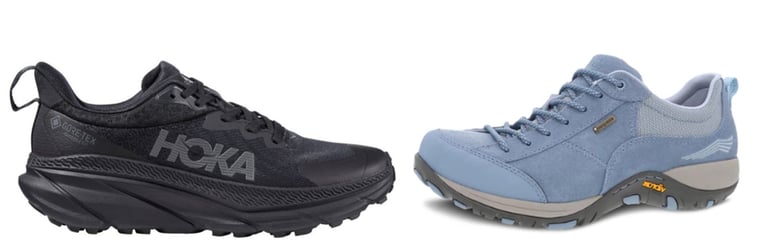
When Greg and I set out on our 1-year travel adventure, we had to choose shoes carefully. Greg's feet were ruined in the Marines and cause him great pain. Choosing shoes with structure and cushion in all the right places is extremely important for him. Without those issues I could choose style and comfort along with durability. My choice of shoe for our journey was the Dansko-Paisley. Greg chose to maintain loyalty to Hokas which served him well in the medical field before he retired. We compared these shoes in an early article The Shoe Competition for Travelers.
There are many reasons to buy good quality shoes. Full-time travelers who visit all ends of the earth tend to walk, hike, bike, and climb. Their feet come in contact with cobblestones, grass, mud, sand, and water. It’s not unusual for a traveler to register 20-25,000 steps in a single day. Those who hike the Camino de Santiago may even register 10-20 miles per day. So, choosing the right footwear is extremely important!
The age or health of full-time travelers weigh heavily on the decision of which shoes to buy. Younger, more flexible feet might be comfortable in a wide variety of shoes, while older grouchier feet might only get a few selections for comfort. Travelers report a variety of feet ailments including, but not limited to, planter fasciitis, fallen arches, high arches, tender pressure points, tarsal or metatarsal injuries, blisters, bunions, and supination malformations. Not isolated to just the feet, travelers must consider their gait abnormalities, knee pain, hip pain, back pain, surgery alterations, and broken bones which rely on the feet to carry them comfortably around the world.
Choosing shoes is clearly more personal than buying a car and sometimes feels almost as expensive. Each person needs to decide it they want a Ferrari, Toyota, or Yugo. Doctors, physical therapists, and podiatrists who are treating a medical ailment may recommend shoe brands they’ve heard about or trialed. Some shoe brands even advertise help on specific ailments. Occasionally, a prescription is even written for orthopedic shoes. On the flip side, professional shoe stores are another place to get help with choosing comfortable, durable shoes. Salespeople and technology can analyze your feet and gait to make recommendations. Then they sell you product they carry. But actually choosing the shoes comes down to the individual person and how they feel in the product.
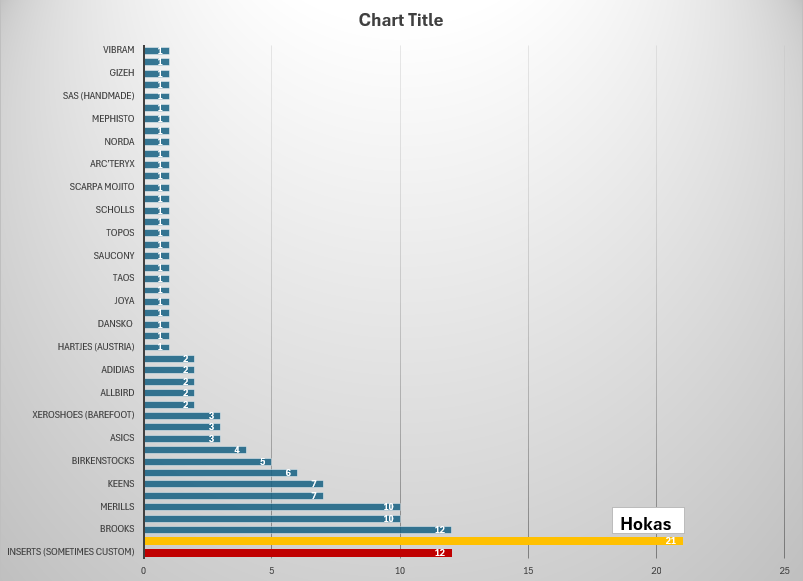
A recent survey of 140 full-time travelers asked what brand of shoes they prefer for the tens or hundreds of miles they walk/hike every year. The analyzed results and Brand winner are shown below.
So, what kind of shoes do full-time travelers buy when they walk 25,000 steps, 30 countries, or 1900 miles? Hoka brand was the leader. But one surprise answer showed up repeatedly in the top two answers. Inserts or innersoles. Over the counter or custom inserts which are placed within the shoe of choice seemed to give the survey respondents the best control for comfort while maintaining a style preference. But even innersoles couldn’t help with brand loyalists when the companies decided to make-over a trusted design forcing full time travelers to pivot in their shoes.
Though shoe choice was contemplated before we left on this European journey, we will definitely consider the wear and tear on our feet at an even deeper level. We have about 3 months to choose and wear a new pair of shoes before we embark again.
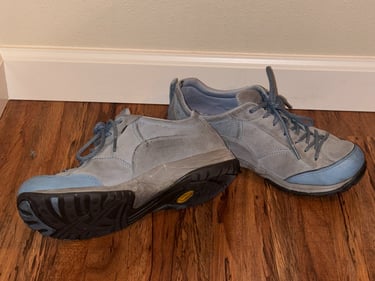
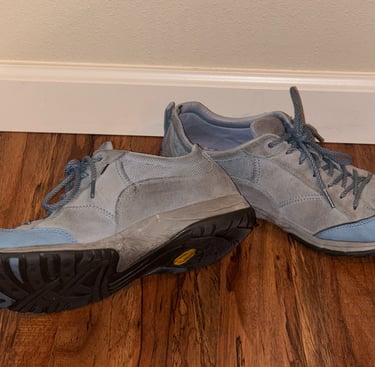
After the first 7- months of walking, my Dansko shoes passed the exterior durability analysis. Though dirty, these baby blue, waterproof sneakers showed little wear in the stitching and mild wear on the tread. But, the Dansko shoes had a significant interior problem. They were designed with a triple density footbed and natural arch technology which provided great comfort and shock absorption early on. But as the heal of the inner sole began breaking down about 5 months into our journey, the shoes left my feet feeling fatigued. Fatigue then turned into heal pain, especially on my dominate foot. Did I ruin my feet wearing these shoes too long?
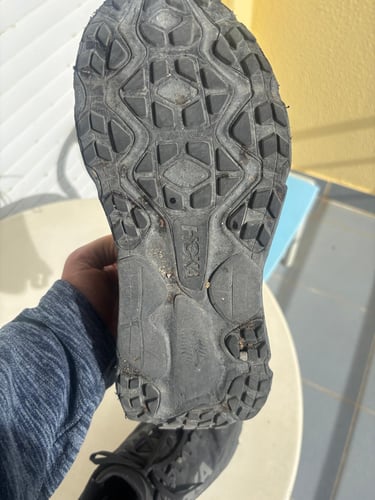
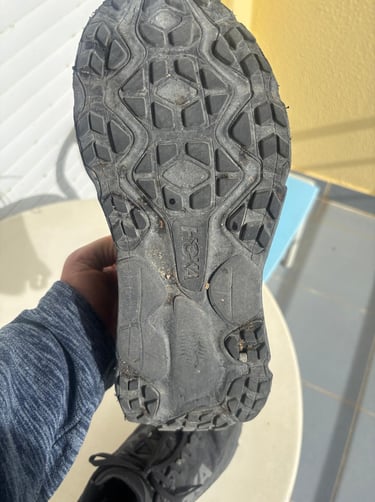
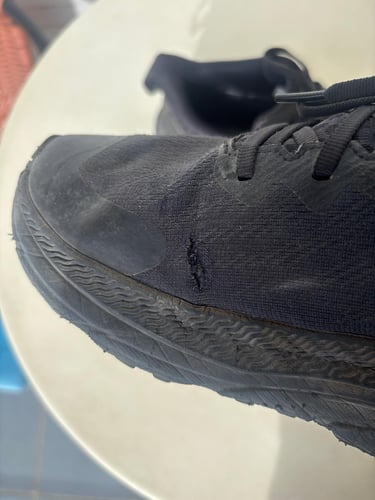
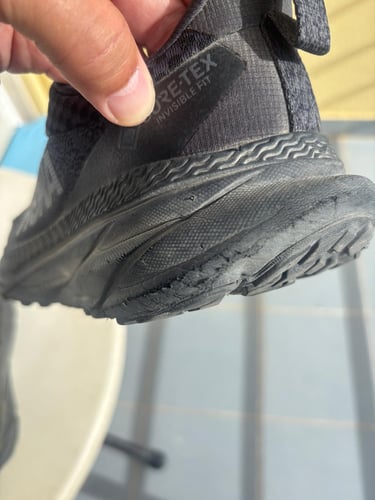
After the first 7- months of walking, Greg’s black Hokas were still black and a bit dirty, but they also showed significant wear. The exterior stitching and fabric was torn in several places. The soft rubbers soles on the bottom of the shoe, which were so wonderfully cushioned for his painful feet, deteriorated with heavy wear patterns showing his unstable gait. The inner soles also had small tears and weakened structure.