Travel, Tornadoes, and Family
Weather has been known to interrupt travel plans, but what if you have to live in severe weather?
LIFESTYLE
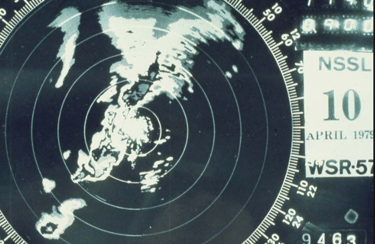
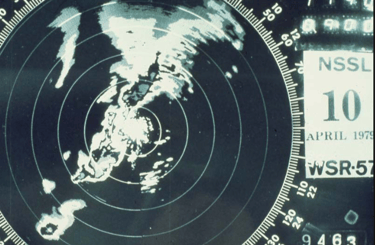
You’ve probably seen some version of The Wizard of Oz. You may have seen the movies Twister, Into the Storm, or The Day After Tomorrow. But standing alongside a local, watching the clouds change, and tracking the radar is a whole other experience in life.
Greg grew up in Oklahoma, AKA “Tornado Alley” where the recording of tornadoes began in 1882. National Oceanic and Atmospheric Administration (NOAA) has reported range of 17-149 tornadoes in any given year since 1950 with the average being around 50. Washington State is where I grew up. There could be 2-3 tornadoes somewhere in the state over any given year. The weather we had to watch for was heavy rainstorms as 30-100 inches of rain fell annually causing massive flooding for the many rivers in my state.
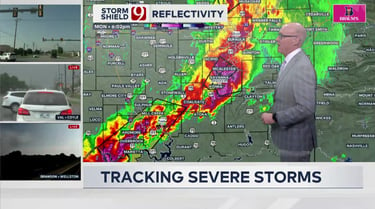
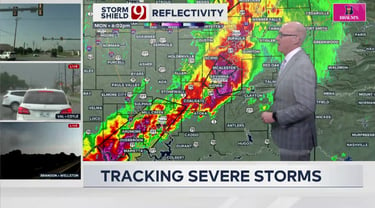
Local “Okies”, as they are called, know how to read the weather. When Greg was a kid, he was taught to keep an eye on the local weather radar whenever there was a Severe Thunderstorm, a Tornado Watch, or a Warning. A Tornado watch is when conditions are favorable for the formation of a strong cell or rotation that may create a funnel cloud. A Tornado Warning is when a funnel cloud or tornado has actually been spotted or detected on radar. If a storm was brewing, Greg’s family would turn on the tv and watch the black and white radar coverage as it went blip, blip, blip showing the thunder cells moving across the state. Nowadays, websites and the news can display multi-colored data gathered from weather balloons launched around the globe twice each day, satellites, aircraft, temperature profilers and surface weather stations. The data recording tools are so advanced, the meteorologists can even track which street has a Tornado touch-down in real time. Despite the advances in technology, Okies haven’t changed their home-grown skill of weather-watching. From winds that whip across the flatlands of the state to the moisture and humidity levels, an Okie always has on their personal radar. It’s startling, to an outsider, to see the Okie prediction as the weather changes swiftly.
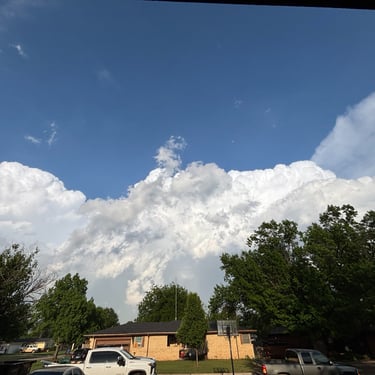
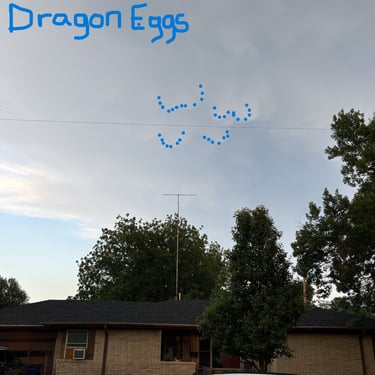
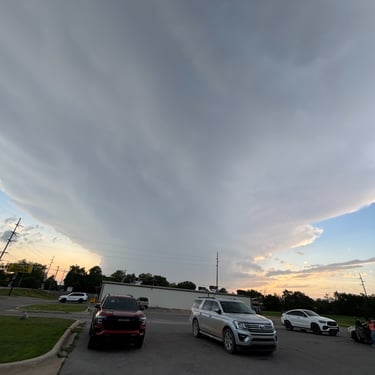
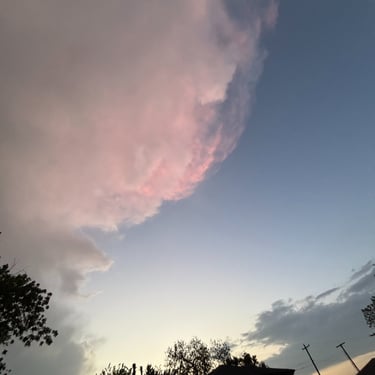
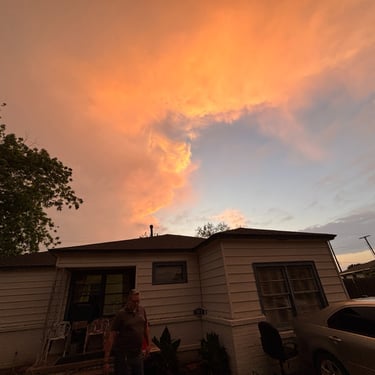
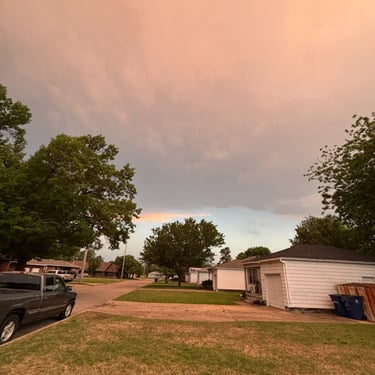
It was a beautiful sunny afternoon with temperatures in the 70s. The expansive blue sky was dotted with a few fluffy clouds nearby while a few more clouds clumped together on the horizon. Fifteen minutes passed and the cluster of white clouds in the blue sky was almost upon us. Watching them, we saw the wind pushing these clouds south, and west and east all at the same time. As the wind pushed the warm and cold air together, the fluffy clouds seemed to bubble larger and multiply like pouring vinegar on baking soda. Then, the “Dragon’s Eggs” formed on the underside of the cloud bank as those beautiful white fluffballs shift to deepening tones of gray. The blanket of clouds moved over the city with blue sky on both sides while Okies casually flicked on the local radar or news. In the distance, an alarm sounded with a mechanical voice telling us the city has activated the “Lightning warning”. This alarm notifies residents that thunder and lightning have begun and the radar watch becomes serious.
Power outages are common and storm cellars are not as common as they once were. At this time, Okies start gathering candles, lanterns, and blankets as they charge their cell phones before a tornado strikes. Some Okies even strap blankets or old mattresses to the top of their automobiles as the marble or golf ball-sized hail begin dropping from the sky determined to dent anything it touches.
With a sigh of relief and guilt, Okies watch the news the next morning. Tornadoes did not touch down in their town this time, but another town was not so lucky. For example, on April 23, 2026, while we were visiting family in Oklahoma, the town of Enid (159 miles away) sustained damage from an EF4. The tornado tore a 9.5-mile path through the town destroying or damaging roughly 40 homes. It was on the ground for 44 minutes and threw debris about 20,000 feet in the air forcing the nearby US Air Force Base to shut down as peak winds topped 170 mph. Miraculously, no one was killed, but 10 people were injured. One Enid homeowner told the local news “We had maybe 30 seconds from the time the sirens went off to when it hit.” Technology still hasn’t been able to predict and protect against mother nature.