Pre-historic Portugal
Hidden fossils in plain view. The former life of stones.
PORTUGAL
Fossils are prehistoric, right? But what if they are right under your nose in the modern world? Have you ever looked closely at your granite countertop? Or what about the marble in the capital building? When you look closely at stones, you begin to understand that they had a life before they gave life to that man-made object.
Like my mother, I've always liked rocks, and geology was one of my favorite classes in college. Recently I read about a term called "urban geologist". This is a person who specializes in the stone of the human-built environment. They look for unusual rocks and secret fossils that most people would walk straight past without noticing and that sparked my interest just as I arrived in Portugal. As I began to observe my environment more closely, I discovered a lot of urban fossils in Portugal.
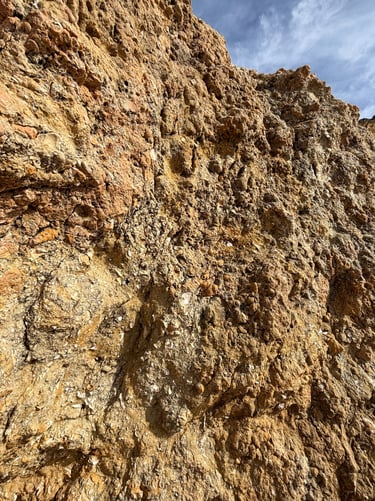
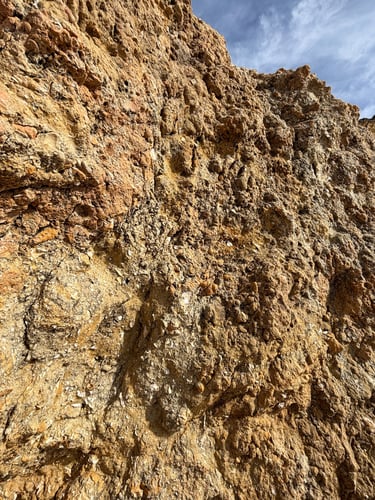
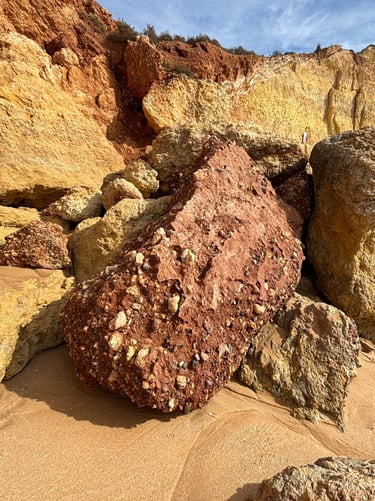
All along the southern region of Portugal is the Algarve. The arid, sandy soils are a vacationer's dream. The rugged sandstone cliffs draw in the photographers for magical shots. But look closely at those massive cliffs and you see the earth which was created from ancient volcanic eruptions. You see the former creatures infused with the rock.
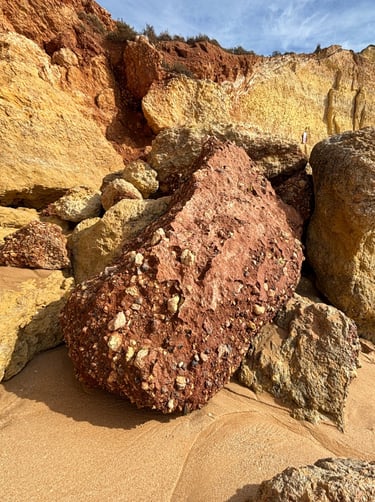
Raw Portugal
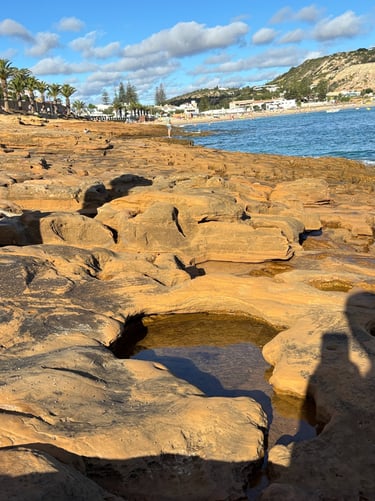
One afternoon we stopped for a walk in a lesser known Portuguese town on the Algarve. The rocks between the promenade and the ocean were gorgeous pillowy stepping stones. As we stepped from one stone to the next, we discovered millions of fossils in plain view. Taking a closer look, the seashells imbedded in the stone were beautiful and mostly of the same kind. We were able to see how the spiral seashells had been eroded by the ocean ponding on it every day. It was clear when we looked at the layers of stone that a cataclysmic event occurred which enveloped the ocean life in one fell swoop.
Luz, Portugal
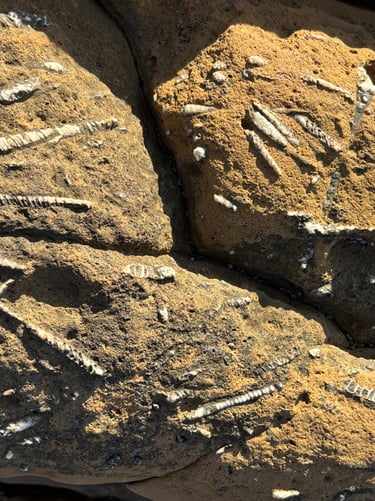
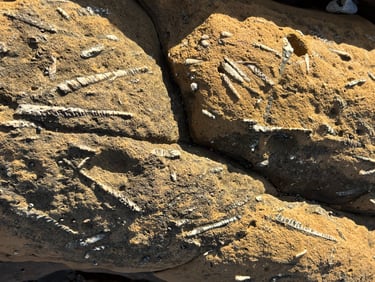
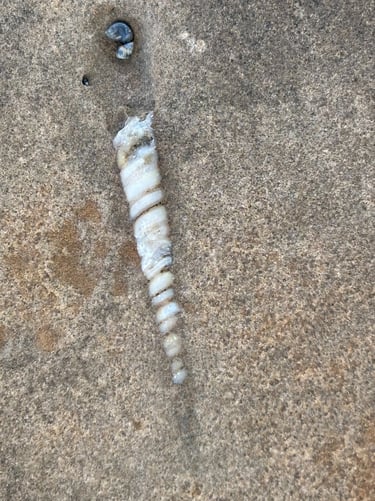
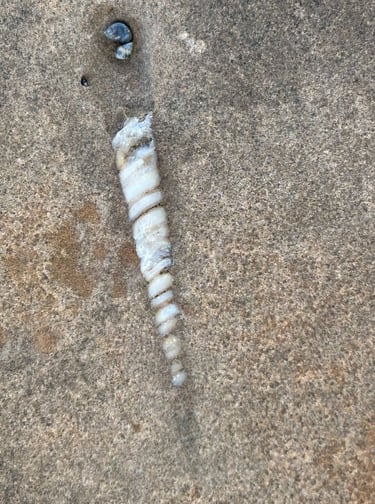
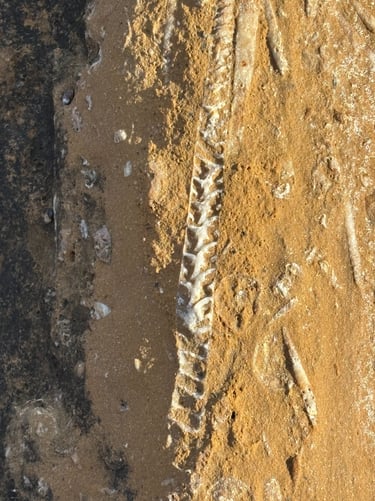
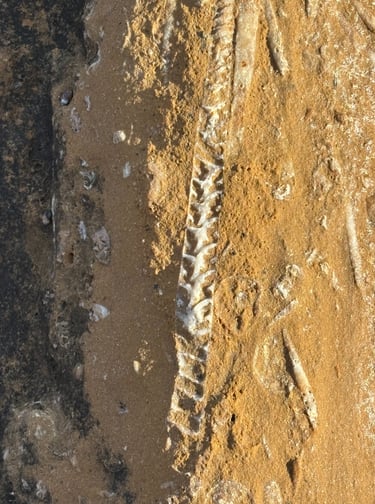
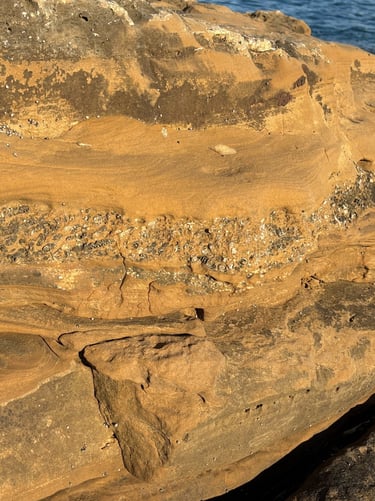
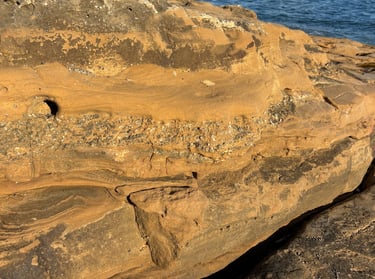


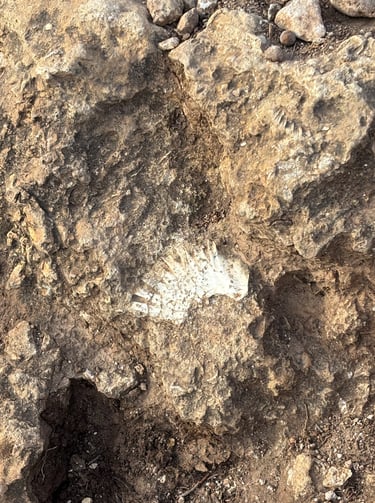
Along the jagged coastline in southern Portugal, there are hundreds of walking trails both official and unofficial. As people walk along the sandstone trails, they erode the rock and expose the former ocean life. Here you see the walkway, the cluster of seashells imbedded in the rock, and a single scallop shell.

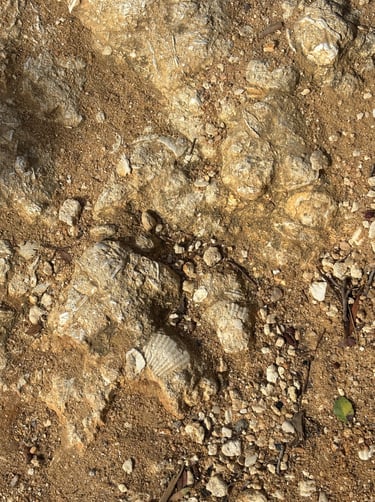
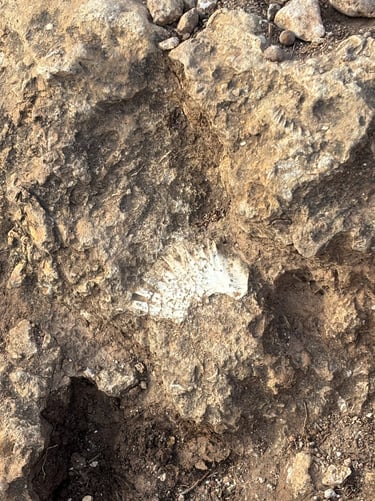
Carvoeiro, Portugal
So, the next time you are walking in nature, be present. Look all about you. Then, look more closely at the obvious stones of the past. What do you see within them that tells a story of long ago? Furthermore, next time you are near marble walls or stone countertops, look closely at patterns. What do you see embedded within?