
War and Travel Advisories
How do you prepare for travel if there is a chance of war or political unrest? Do you know your own risk tolerance level?
TRAVEL
It’s not uncommon for a “war” or “conflict” to emerge somewhere on the planet in any given year. If you’re older like us, you might remember some of the conflicts America had. To some they may seem rare occurrences while others may point to many actions that placed people in harm’s way for a variety of reasons. Whether the conflict is social or political, travelers must contemplate their risks before choosing destinations. So, before you make all your plans for a destination ask yourself some of these questions:
Second, we review news media from that country. Remarkably, everywhere we visited so far has had English news available on TV and/or the internet in some fashion. There are many global news feeds that can get you started.
Third, we look on YouTube. Type in any city and “Travel Advisories” or “Travel Safety Warnings/Issues”, or something similar. Content creators are great about the “Do’s and Don’ts” of places. Additionally, there are content creators who literally walk the streets and point out concerns or lack thereof in cities around the world. Keep in mind while watching, that signs of poverty or less modern infrastructure do not always signal crime or safety concerns, nor are these always recorded by content creators.
Before we travel, we use a variety of resources to ensure that we have the best possible information about a destination. No, we don’t just look at the best attractions and bus schedules, we look at safety and risk too.
First, begin with U.S. Department of State website under travel advisories. What do they say about your destination country and even neighboring countries? They analyze risks every 6-12 months or more frequently if necessary. The website describes the current level of risk and reasons. Take action to sign up for the Smart Traveler Enrollment Program (STEP) so you can get alerts from the US Embassy and Consulate while traveling.
Where do I want to visit?
What is the current news there (protests, riots, coup, war, etc.)?
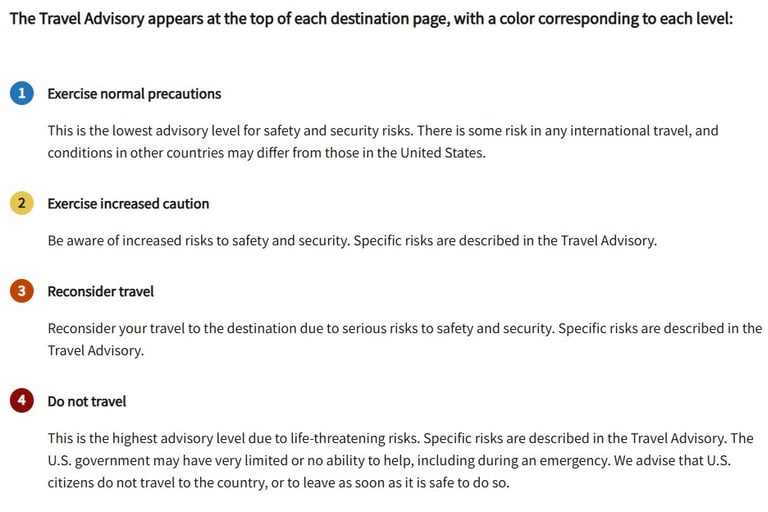
What risk level does the state department assign this destination in their international travel advisory map (Level 1, 2, 3, or 4) and which risk indicators were noted?
How are airlines and cruise ships treating the area (business as usual, modified schedules, cancelled flights or ports)?
Can you afford to cover cancellation costs and pivot somewhere else if things get uncomfortable?
What is your personal risk tolerance (comfort) and level of worry by your family?
What is your backup plan should an emergent situation arise (family emergency, natural disaster, political upheaval, police or military actions)?
Is it feasible to immediately travel to a neighboring country? Where is the nearest US embassy or Consulate? Nearest International airport, port, train station to your current location?
Fourth, we watch Live Streams and Podcasts when available. The best news many times is the unfiltered person on the ground documenting what is happening on their cell phone in real time. Often, podcasters live and/or work in the country, region or city and upload raw footage. If the person in the audio/video is talking too much, or has an obvious agenda, just hit the mute button and just observe for yourself. Is this a risk you can manage?
Now, let’s make a back-up plan. If your beautiful travel plans go sideways, how can you maintain your safety and make the best of a bad situation? Buy the right insurance!
Your cheapest TRAVEL or TRIP insurance will cover the four basic elements:
Now, shift and dig deeper. Most MEDICAL insurance policies for long- or short-term travelers will pay out if you get ill or have a physical injury while traveling. For example, these insurance plans tend to cover
Trip Cancellation: This benefit is designed to protect prepaid, nonrefundable reservations, including flights, hotel reservations and other bookings if the trip is canceled due to extraordinary circumstances.
Trip Interruption: This benefit is a post-departure insurance to use if your travel gets interrupted and you cannot finish the journey.
Trip delay: This benefit is protection against additional expenses you incur when your travel booked on a common carrier is delayed.
Lost Luggage: This benefit covers the cost of lost items while you travel.
Emergency medical or dental care.
Emergency medical transportation to the nearest hospital for medically necessary care.
Transfer mortal remains home.
Now read the fine print! Get through the hideous technical language. Read the contract if necessary or just call the company. Does this travel medical insurance policy cover these more expensive services which can exceed $250,000?
Crisis response for kidnapping, disappearance, or wrongful detention.
Emergency evacuation services due to political threats, terrorism, natural disaster, pandemic or violent crime.
Repatriation to your home or a safe country due to a medical or political situation.
No one wants to get into all this research just for a vacation. But, what’s the alternative? Stay home? It's important to know what is happening in the potential vacation destination. Is everything dandy? Are there some protests? Is it more serious? Countries that have level 1-2 risk factors by the state department are great choices for a destination. Countries with level 3-4 risk factors are ok for travel if you choose to accept the risk. In our research we found some insurance companies do not cover high risk situations or know situations. For example, the 2026 war in the middle east is a "known" situation and some insurance websites are identifying that on their landing page with details that coverage is not available in that region.
Planning a vacation can be a challenge, but the rewards can fill your bucket if you do it right. If the research for a vacation seems overwhelming, break it into chunks and divide the work among the travelers. Even a teenager can log onto the international travel advisory map and check the safety levels while the adults research insurance companies.
How does the insurance actually work? I found this great article from AlianzCare which describes more about the process of Repatriation Insurance | Medical Evacuation | Allianz
Follow the Stones with more reading about safety when traveling.