The Many Cultures of Cheese
As one of the oldest forms of food on record, Cheese is still a vital part of cultural foods around the world.
LIFESTYLE
It seems as though most “cultures” have a relationship with cheese (pun intended). And, why wouldn’t they? As one of the oldest foods on record, cheese production is about 8,000 years old. With the domestication of cows nearly 10,000 years ago and sheep’s domestication in places like Türkiye, Iraq, Lebanon or Syria around 8,000 years ago, it’s no wonder that the process of fermenting animal milk to make yogurts and cheeses enhanced the rudimentary diet of so many civilizations. It became a staple of many cultures. As we travel, we have enjoyed the experiences of sampling various yogurts and cheeses.
The first known reference to yogurt (yoghurt) was in Mesopotamia around 5,000BC. It is assumed that the milk was exposed to bacteria and soured in the warm temperatures of Türkiye. The most famous reference to cheese comes from Greece around the 8th century BC. As described in Homer’s Odyssey, baskets of cheese and whey were in woven baskets which we see displayed in many ethnographic and archeological museums.
In our travels so far, we have had the pleasure of sampling these amazing dairy products.
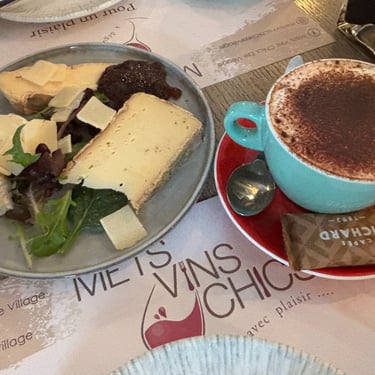
As I said above, cheese has been a staple in the diets of many cultures around the world. These are only a few of our experienced cheese in America and Europe. We are certain to try version daily products in our future travels.
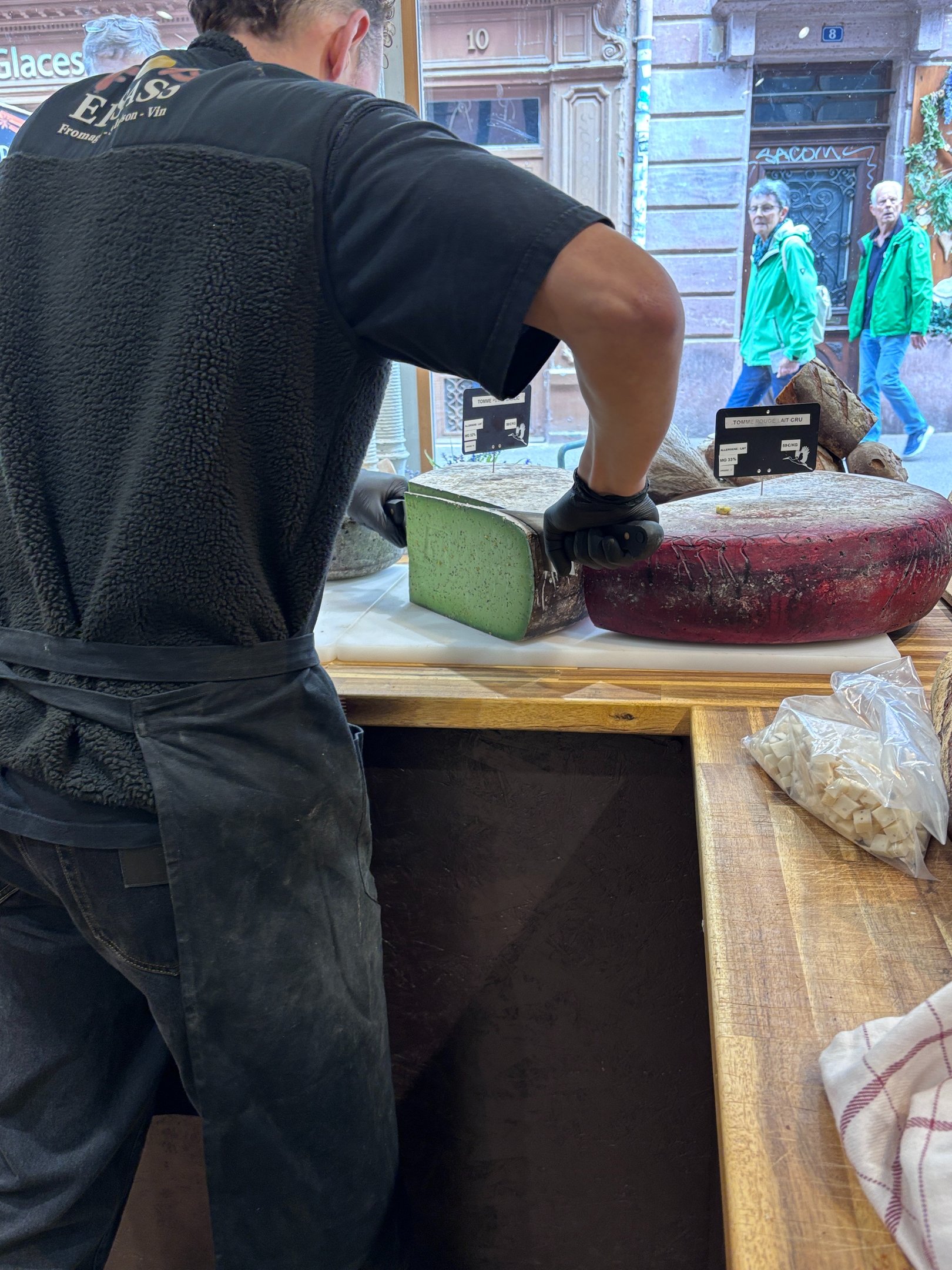
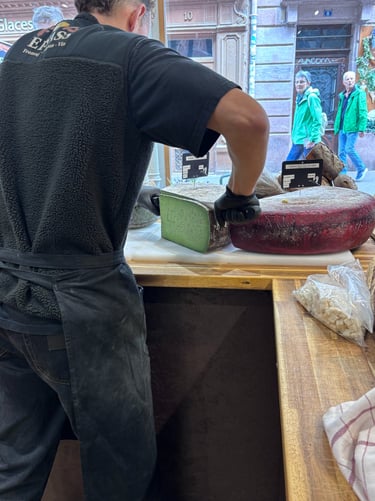
Bonus: In Colmar, France we bought Pesto cheese from a Fromagerie and used it in hot and cold dishes.
Greek Yogurt: Once considered to be only a peasant food, yogurt gained popularity in the 12th-13th century when Genghis Khan’s army needed nourishment.
Salce Kosi: This is an Albanian cross between a sour cream and a yogurt and is often used a dip for meat, vegetable and bread. Being very high in protein Salce Kosi has been a fundamental supplement to many hot and cold dishes.
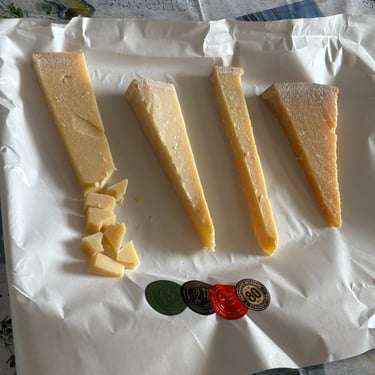
Parmesan cheese: Dating back nearly 900 years, a true parmesan cheese must be certified by Italy (PDO) as being produced in the Parma region with specific cows and methods. There is no limit to the uses for a true Parmesan cheese including grating it for pizza or pasta, baking it on casseroles, and mixing it into rich sauces. Parmesan is especially important for people who are lactose intolerant. Read below for more on this.
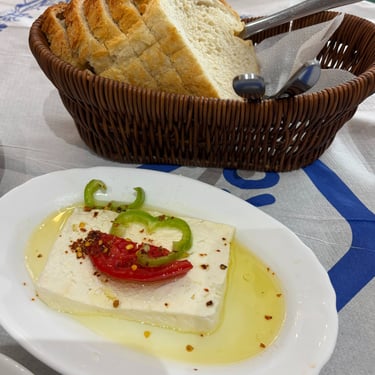
Feta cheese: A Greek certified cheese, authentic Feta cheese is produced with sheep and goat milk. Though many other cultures produce a similar version of white crumbly cheese using any variety of goat, sheep or cow milk only the Greek PDO version can be called Feta. Though frequently associated with Greek salad, when fried in phyllo dough it makes a popular Greek appetizer called Saganaki.
Camembert cheese: Not to be outdone by the Greeks or Italians, France certifies its Camembert cheese with a history dating back to the 18th century in the Normandy region. This soft, white cheese is used on sandwiches, in salads, and baked whole.
Neufchatel cheese is one of the oldest kinds of cheese in France dating to around the 6th century AD but has been AOC certified since 1969. This heart-shaped soft white cheese is not the same as the American factory-made Neufchatel. The AOC version is best served on bread, used in dips/spreads, or baked in cheesecakes.
Livarot cheese: Also known as the “ringed cheese” because the rind is wrapped with dried reedmace, Livarot is a soft pungent cheese from the Normandy region that was ACO certified in 1975. It pairs well with nuts, fruits, and cured meats, but can also be melted on pizza or tarts.
Pont-l’Eveque Cheese: With another nod to the Normandy region of France, this 1976 AOC cheese is traditionally square-shaped cheese and made from uncooked unpressed cow’s milk. While used on cheese boards and incorporated into baked dishes, this cheese pairs well with fill-bodied red wines, rye breads, or pickles.
Graviera cheese: A famous hard cheese from the island of Naxos, graviera can only be certified PDO if it is produced on the island with at least 80% cow’s milk. It is highly versatile for culinary uses including fried cheese, grated cheese, or stuffed into vegetables.
Emmental cheese: An AOP cheese from Switzerland about 7 centuries old, this semi-hard cheese made from cow’s milk is a Swiss-style of cheese with holes. It can be used for both hot and cold foods. Great cheese boards, fondue or baking.
Gruyere cheese: A cheese produced in Switzerland, this AOP cheese can be traced back specifically to 1115 AD in its native land. Granted a Protected Designation of Origin (AOP) in 2011, this cheese is most famously known for croque-monsieur sandwiches, fondue, and topping a bowl of French onion soup.
Raclette cheese: Known as both a cheese and a melted cheese dish of the same name, Raclette has origins in the Swiss Alps. Cow herders used to melt it by the fire and scrape it onto bread. It is also used to top meat, cured meat, potatoes, and other vegetables, but can also be eaten raw.
People who are lactose Intolerant do not have to miss out on the great tastes and benefits of cheese. They may experience and enjoy aged, hard cheeses like Parmesan which have less sugar and are easier to digest. Additionally, they may enjoy cheese from goat’s milk or soft cheeses with lower levels of lactose.