Switzerland Transportation and Passes
Everyone has access to transportation in Switzerland, but tourists must know some basics to begin.
SWITZERLAND
Know Some Basics
First, understand that much of the country’s transportation system is operated by SBB Switzerland and downloading their app is vital. Not only does the app allow ticket purchase, but it also displays routes, timetables, train car configurations (ex. where is the café car or bike racks?), maps of the stations, how full are the train cars, and so much more.
Second, take note that tickets are REQUIRED and any passage without a ticket will be fined on the spot as well as being charged the ticket amount. The conductors are no-nonsense on this matter. Additionally, the transportation modes tend to be quiet and headphones are required when using devices.
Third, prepare your pocketbook for the cost of transportation. There are peak prices for summer and others for winter. Spring and autumn are the shoulder seasons. Busses and train are the less expensive options where a short route may cost nearly the same price on either mode (3.40 CHF each). Cable cars, gondolas, and funiculars are more expensive (ex. 7-15 CHF each). Also note that in some cases they may cost less to ride UP the mountain than down.
Fourth, do your homework. Recognize the value of prepaid travel passes (ex. Interlaken city pass, Berner Oberland regional pass, Jungfrau Regional pass, Swiss Half-fare card, etc.). Predicting the cost of your usage is not very easy. The fares are not readily posted on websites, and those fares change with high and low holiday seasons). Following this YouTube channel Aplins in the Alps will help you. During our 16 days through the country we saved money with the Interlaken Pass provided by our Airbnb host, we save a little bit with our half-fare card (valid for 30 days), and we broke even on the purchase of a 10-day Berner Oberland pass.
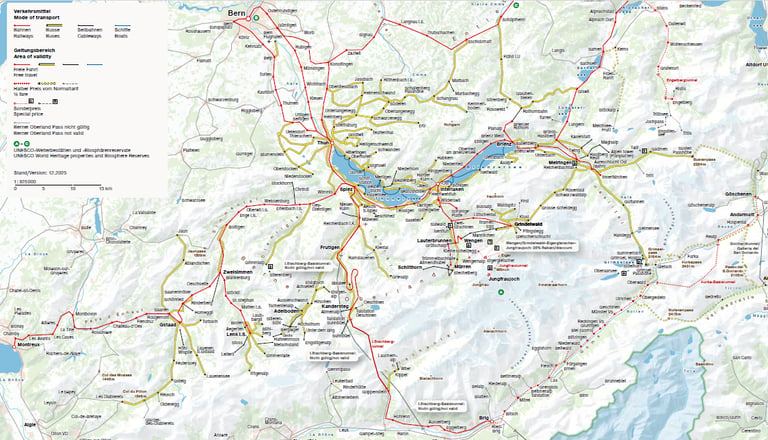
Fifth, know the limitations of any travel pass. Once you choose a travel pass, understand there are zones of validation in which you will pay nothing extra for the bus, train, gondola, etc. However, there are activities which will not validate your travel pass. For example, using the Interlaken and Berner Oberland passes, you can ride the bus and train from Wilderswil to Grindelwald, but then you must pay more to ride the Grindelwald cable car or play on the adventure activities at Grindelwald First.
With a keen eye on mobility, the Swiss have designed transportation systems that work rather seamlessly across the country and regions. All modes are very clean, accessible, easy to understand, consistent, and safe. We saw local tweens riding alone without accompaniment. Tickets or passes are always required, and pre-purchasing tickets are highly recommended. However, as a foreigner, the system is not so easy to understand until you put boots on the ground.
What types of Transportation are there?
For starters, this is not an all-inclusive list. Swiss Transportation is amazing.
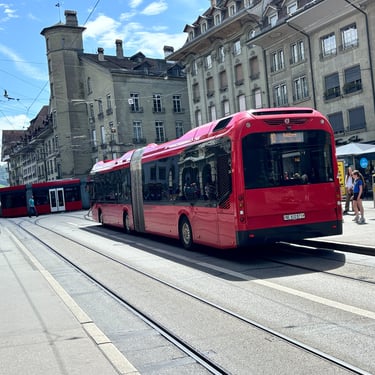
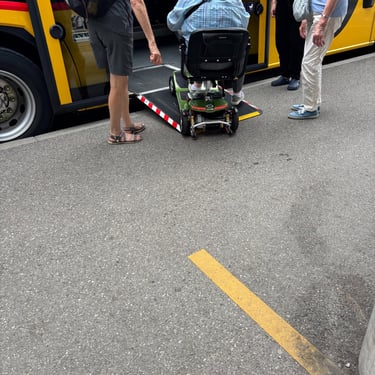
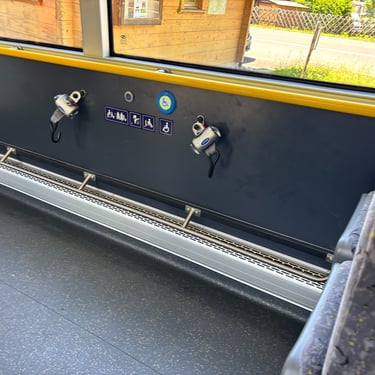
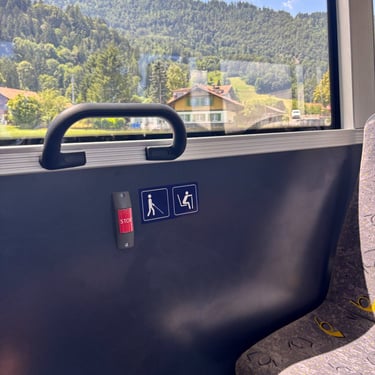
Busses: The Bernese Oberland and Jungfrau regions of Switzerland use busses where they can. Many are accordion style to fit more people. Bikes hang on the outside, people can sit or stand inside safely, spaces are labeled for strollers and pregnant women, and amps fold out for wheelchair access. The busses are extremely clean, maintain schedule best they can, have electronic reader boards for news and bus stops, and use “stop” buttons for cuing the driver for the next scheduled stop. Many of the accommodations will give you a pass for the bus transportation in the designated validation area which gets you to most of the towns.
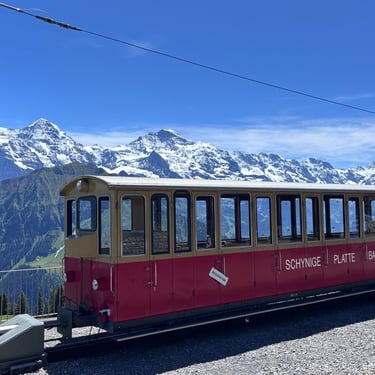
Trains: The robust train system in all of Switzerland is clean, comfortable, and reliable. Country-wide routes operate through Interlaken in an east-west motion making travel to and from the area easy; but local routes run up/down the mountain too on main lines several times per day in both modern and historical trains. There are new trains and historic trains. Each one has a special purpose. So, settle into your seat for transportation to the destination or breath in the journey too.
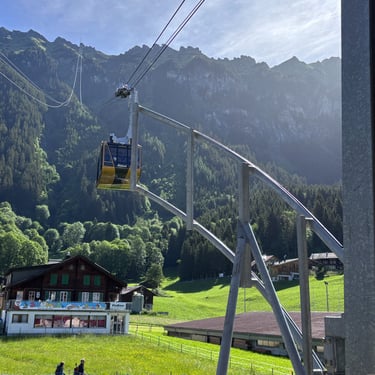
Cable Cars: Also called an Aerial Tramway, typically move 80-100 people up and down a mountain in two large cabins. One car goes up while the other comes down. (Ex. Schilthorn)
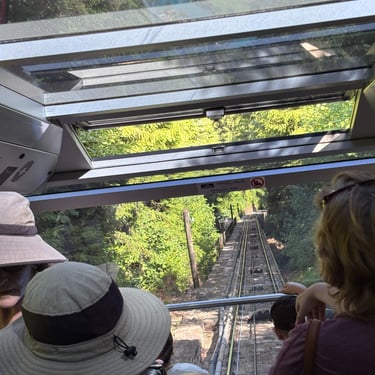
Funiculars: Running on a rail system, two cars are permanently attached to a pulley system that moves one car up while the other slides down very steep hills in a counterbalanced dance. (Ex. Harder Kulm)
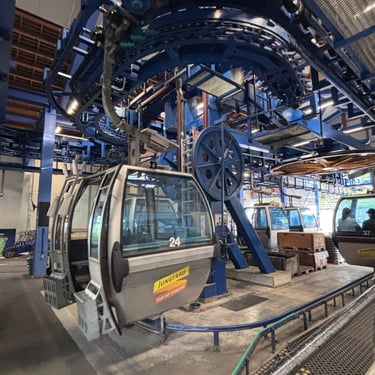
Gondolas: A single continuous loop with dozens of cabins, these move groups of 4-12 people in a continuous loop. They slow at the station to let guest board but never stop completely (ex. Grindelwald Terminal to Männlichen.)
Boats: Because Interlaken is located between two lakes, there are a variety of boats that work like ferries to smaller towns dotted along the water.
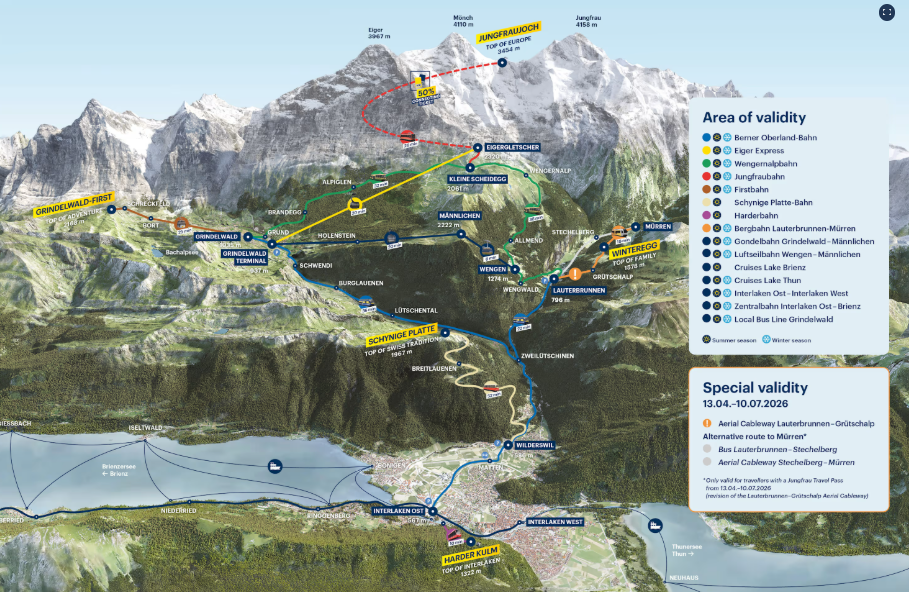
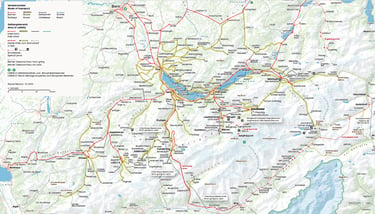
Validity Area for the Berner-Oberland Pass
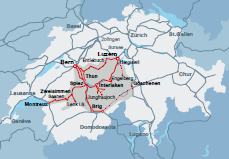
Validity Area for the Jungfrau Travel Pass

What if I have mobility limitations?
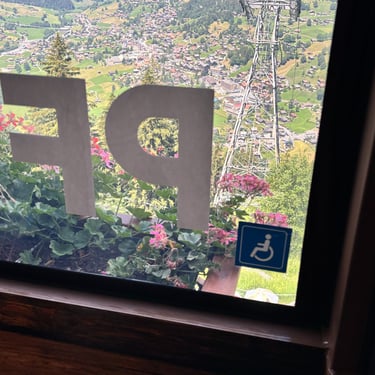
Switzerland prides itself on providing barrier-free travel systems. As stated on the Switzerland Tourism website…
“No matter whether you are in a wheelchair, find it difficult to walk, have a visual or hearing impairment, are a senior citizen, or have small children with you in a pushchair: travelling in Switzerland can be comfortable and barrier-free for everyone.”
Conclusion: The trouble with Swiss travel if you are traveling fast through the region, it feels like only 75% of the information is being provided. From travel directions to prices, it felt like there was too much reliability on intuition versus detailed information. Therefore, stop, listen, observe, and don’t be afraid to ask for clarification. Even the strict ticket conductors were sweet as pie if you were polite and followed directions.
Links to more Information: